Showing posts with label life and faith. Show all posts

Tuesday, July 15, 2014

Redeeming Play


Try typing "unstructured play" into your Google search engine and you will turn up an impressive list of magazine and journal articles, blog posts, and research studies all claiming that unsupervised, free-time is the key ingredient to our children's health and happiness. A recent Atlantic Monthly article by Hanna Rosin titled "The Overprotected Kid" highlighted a new style of playground in the UK where kids are free to start bonfires, roll down the hill in a barrel, and build ramshackle forts all with minimal adult supervision. Adults observe passively and only intervene in worst case scenarios or, one would hope, when things descend a little too far into a chapter from Lord of the Flies. The benefits of unplanned, unsupervised play range from increased creativity and confidence to better decision-making skills and greater emotional resilience. In these articles, parents are routinely encouraged to back off and let play work its magic.   

Allowing unsupervised play does not seem to require convincing among parents in Vietnam. Our alley is wider than most and has less motorbike traffic so it functions as central park for our neighborhood. Kids walk or ride their bikes here to play soccer or tag or hide-and-seek. Even four and five-year-olds have free run of the alleys. I've met a dozen or more children over the past weeks and only two moms (in passing when they came to call their kids home to eat). Instead of adult supervision, there seems to be some sort of age/size determined pecking order by which the older kids boss the others around and periodically thump the littler ones to prevent insurrection. Whichever child is biggest automatically assumes the role of chief and then relinquishes the title when someone bigger comes along.

Usually play starts out Norman Rockwell enough, but it often deteriorates. Caleb has been upset for weeks because he watched a group of boys kill a bird. Nathan regularly comes through the door indignant because kids pinched his cheeks. Recently the two of them came running up to me all excited because they met a boy who knew English. They dragged me to see and I was dismayed to discover that their friend's repertoire consisted of two unmentionable words and the accompanying hand gesture. Our boys had never heard this expression before and were quite impressed that their friend could shout it with such flare. I tried to convince them it wasn't really English.

A week ago, one little boy crashed his bike outside our front gate. He was brave about it, but pretty scraped up. I brought him in and patched him up as best I could. I gave him something to drink and sat with him in the kitchen. Another boy followed us in and must have wanted a little TLC himself because he started showing me his own injuries, a dime-sized burn on his chest from his dad's cigarette and bruises up and down his legs. I thought I must have misunderstood him, so I asked him to tell me again how he had been hurt. The boy got embarrassed and ran outside.

This is where we live. This is where our boys play. There are days when I want to lock the gate and cut power to the doorbell. I want to gather my boys and retreat to a place that is safe and ordered and clean. Oddly enough, the boys themselves prevent me from doing this. They insist on being out in the alley. They have persisted in getting to know a few of the other kids and consider them friends.

I was musing recently and realized that there can be merit to all of the things the boys are experiencing, but like all of life, play is tainted by sinfulness. Kids are broken, relationships are broken, play is broken. Redeeming play requires prayerful engagement as a parent not passivity. I may not plan activities for the rabble outside or monitor every interaction, but I need to be aware of what is happening and ready to respond to Caleb and Nathan when they want to know why the other boys are being cruel to an animal or shouting vulgarities and expletives. I need to intervene when my children are in over their heads. I need to exercise wisdom as a parent and an adult when my kids lack maturity and wisdom themselves.

I have been reading the book of Proverbs and realized that the creativity, confidence, problem-solving skills, and resilience we want for our children all fall under the umbrella of wisdom. Our alley has certainly become wisdom's classroom. In the past weeks, alley interactions have spawned conversations at home about valuing and protecting God's creatures, guarding our words, keeping our bodies safe and private, loving our enemies, and being thankful for the the difference grace makes in our lives when we try to follow Jesus. I find myself praying for wisdom and growing in wisdom as I help our boys learn to redeem play.

Saturday, January 29, 2011

Orphan Care--Adoption and Beyond

"Religion that is pure and undefiled before God, the Father, is this: to visit orphans and widows in their affliction, and to keep oneself unstained from the world."  James 1:27 (ESV)
Earlier this week I came across this testimony from the Haines family who, in the process of adopting a young girl from Ethiopia, began to wonder if there was something else they should be doing to care for orphans in parts of the world stricken by poverty. I was thankful they shared their story. Adoption is a loving and often necessary way to intervene on behalf of abandoned and vulnerable children. In adopting, parents model God's adoptive love that takes us from our sin and self-destruction to make us his children. Adoption is one way to reenact the gospel. It is one solution for orphaned children. However, as Seth and Amber Haines demonstrate, it is not the only solution.

My closest friend in Vietnam is not able to have children. Instead, she and her husband have been blessed with an ever growing ministry among the poor. A few years ago, my friend called one evening and told me that something completely unexpected had happened. They had just brought home a newborn baby. The baby boy had been born prematurely to drug-addicted parents who were living on the streets of Ho Chi Minh City. A mutual acquaintance asked our friends if they would intervene and care for the baby at least for a little while.

When I first met him, Binh was so tiny I could barely hold him against my shoulder. With one hand under his bottom and the other patting his back, my elbows stuck out perpendicular to the floor as if I were playing the violin. He was small and wrinkled and his chest sometimes sucked inward indicating that his lungs were not functioning exactly as they should. My friend and her husband cared for him around the clock. They got what medical help they could without a birth certificate or any form of identification. They fed Binh and bathed him and loved him and prayed for him. Without even meaning to, they became his parents.

Every week they met Binh's birth parents at a local shopping center so the couple could see the baby and play with him. Some weeks they seemed to be really taken with their child. Other times they were barely interested. At some point, the dad disappeared and was later arrested and jailed for drug trafficking. Binh's mother admitted that she was never entirely sure who the real father was. Our friends tentatively began to suggest the possibility of adoption.

Binh's mother moved back in with her parents who encouraged her to give the baby up. Instead, she entered a drug-rehab program and found a job. In spite of several failed attempts to stay off drugs and months of ups and downs, she eventually made progress. She even began to get involved in a church near her home and was later baptized. During all of this, our friends kept Binh and cared for him. They desperately wanted to adopt the baby who had become in so many ways their own, but they also recognized that this mother loved her son.

At one point, they stopped suggesting adoption. They began to leave Binh with his mother for longer periods of time and shifted their energy to helping the mother learn how to care for her child. My friend spent countless afternoons in the tiny, ramshackle house where Binh's mother lived helping her play with her son and understand his needs. I remember many conversations with my friend as she went back and forth about what would be best for Binh. In the end, they made the very hard decision to give him back to his mother.

Adoption is one way to rescue orphans and children whose parents can not or will not care for them. It is one way to live out the gospel. Intervening in a desperate situation to lovingly restore a broken family is another way. I do not want to minimize the important role of adoption, but I think the American church can benefit from stories like Binh's and that of the Haines family. Orphans around the world are not always parent-less, but they are powerless. They need our wise and loving care demonstrated in myriad ways.      

Monday, January 24, 2011

To Make a Mom's Day

A few weeks ago Daniel and I went to a meeting at some friends' house. Because they didn't have a lot of extra space, we hosted all the children and two babysitters at our place. The babysitters often help out with these get-togethers and they have watched our boys several times. When they arrived, one of the first things they said was, "We LOVE watching your boys."

Given that some days I don't want to watch my boys, this was astonishing. I was rendered speechless. Now that I've had a few weeks to savor it, I've realized that the straightest route to encourage a mom is to enjoy her children. Compliments are nice, but genuine enjoyment is harder to dismiss. When people tell me that one boy is smart or the other is sweet, I am grateful that the pair managed to cooperate for the ten minutes that the person spent with them. I do think the boys are smart and sweet (thinking that is part of my job description), but I also know they are quite capable of being a host of other things. When a person spends an hour or more with the boys and can't wait to see them again, I am encouraged.

So, if you know a young mom and you spend any amount of time with her kids, the best way to bless her is to love her angels. When they wipe jam on your pants and sneeze in your coffee, when they throw themselves in the middle of the floor screaming because Mom said "no," when they take twenty minutes to find their shoes and put on their coats, do your best to grin and bear it. When they crawl up in your lap with a picture book or bring you their favorite toy to "share," enjoy the moment. You love a mom when you love her kids. 

Thursday, January 20, 2011

The Wife

I've been pondering the following poem by Emily Dickinson but am still not sure exactly what to make of it. It is interesting that the unspoken sense of loss in stanza 2 produces pearls AND weeds in stanza 3. Who is "himself" in the last stanza? I assumed the husband, but it isn't made clear. Is this a tribute to wives and the marriage relationship or a critique of those things? What do you think?

The Wife

She rose to his requirement, dropped
The playthings of her life
To take the honorable work
Of woman and of wife.

If aught she missed in her new day
Of amplitude, or awe,
Or first prospective, or the gold
In using wore away,

It lay unmentioned, as the sea
Develops pearl and weed,
But only to himself is known
The fathoms they abide.

"The Wife" by Emily Dickinson. Found in Favorite Poems of Emily Dickinson published 1978 by Avenel Books.

Thursday, February 4, 2010

Contagious Kindness


     "The fact is," said Rabbit, "you're stuck."
     "It all comes," said Pooh crossly, "of not having front doors big enough."
     "It all comes," said Rabbit sternly, "of eating too much.... Well, well, I shall go and fetch Christopher Robin."
     Christopher Robin lived at the other end of the Forest, and when he came back with Rabbit, and saw the front half of Pooh, he said, "Silly old Bear," in such a loving voice that everybody felt quite hopeful again.
 From "Pooh Goes Visiting" in Winnie the Pooh by A.A. Milne
  
Image located at http://pictures-of-cartoon.blogspot.com/2007_03_01_archive.html

Tuesday, February 2, 2010

A Hiatus

Hello again. I'm back from an unplanned three-month hiatus. There wasn't a reason for the long silence. I just got distracted by life and its many demands. Friends often ask how we are adjusting to being back in the States. I never have a good answer to that question because part of adjusting (or readjusting) is disequilibrium. Whenever I move to a new place or adjust to a new/old culture, I lose my sense of balance for a while. It takes a few months before I can move beyond just living and be able to process the experience or write about it. Maybe this explains my inability to blog over the past few months. In any case, I hope to return to writing and keeping in touch with all of you. I've missed you.

Thursday, May 21, 2009

Blundering

I'm sorry for the long pause between blog posts. I've been busy packing and cleaning and getting ready to move countries. We really should be used to this routine by now. It seems that every few years we go through the same process. Disassemble the entire house into four piles: trash, stash, ship, or carry. Since shipping is expensive, stashing requires space, and carrying is heavy, we inevitably have to jettison belongings along the way. In most cases, I enjoy the purge. It is no sacrifice to toss frayed and sweat-stained t-shirts, ratty linens, or piles of tacky wooden wall hangings, beaded purses, and gaudy fabric we've collected along the way. Other things, though, are harder to leave by the wayside.

Yesterday morning I piled all of our baby stuff into the back of a minivan taxi and took it to a crisis pregnancy shelter that a friend of mine helps run. For weeks I have been boxing up baby clothes, washing blankets and playthings, and gradually taking items out of daily use to add to the growing pile. Every time I would pack a onesie or a baby outfit I would think, “Oh, this is what Caleb wore on the plane when we brought him back to Vietnam.” “Awww, these are the onesies Aunt Jill brought to Singapore for Nathan.” “Oh look, the trendy little overalls James and Katie sent us.” Aside from the few practical things I bought for the boys, all of the clothing reminded me of someone—my mom, my aunts, my grandma, the ladies at church who gave us a shower, friends from college, Daniel's mom and sister, and on and on. All of it was past being useful, but all of it was still very dear.

Being a good nomad, I stiffened myself to the task and mercilessly culled and boxed everything that lacked a practical purpose (well, almost everything). I consoled myself with the thought of encouraging unwed mothers and providing for babies rescued from abortion or abandonment. I imagined the women enjoying the gifts as much as I had when they were first given to us. I pictured Vietnamese babies being shown off at church wearing Caleb's overalls or Nathan's onesies. I've lived in Vietnam long enough that I should have known better. Things are never as romantic as I like to make them.

When we arrived at the shelter, three of the babies were asleep sprawled on a bamboo floor mat with their caregivers. The women jumped up and invited us into a one-room home with beds in two corners for the mothers and a row of cots for infants. The back door opened to an outdoor kitchen and latrine. One of the mothers, a mentally handicapped girl who was found pregnant and living outside of the local market, sprang forward with her baby and thrust him into my arms. I reacted just in time to keep his head from lolling backward and was instantly reminded of a small detail I had overlooked. Vietnamese infants and toddlers typically don't wear diapers. As soon as the baby was dropped in my arms, I felt something warm oozing down my elbow and seeping through my shirt. I began to pray for the best, but the stench confirmed the worst. I found one of the caregivers and tried to pass the baby off nonchalantly. She whisked him away to be hosed down outside, and I was led to a tap where I could wash up amidst a pile of breakfast dishes piled on the ground.

As I washed my hands and rubbed dishsoap into my shirt, it began to dawn on me that onesies, overalls, footed pajamas, even pants and shorts weren't all that useful to moms whose babies don't wear diapers. The infants were dressed only in worn cotton t-shirts. They had cloths tucked under their bottoms inside the cots, and the moms or caregivers held similar cloths on their laps when they rocked or fed the babies. The toddlers wore two-piece outfits similar to pajamas. Periodically they would be herded into a corner and helped to do their business in a small bucket.

I began to realize that the items which were so precious to me were of very little value, except maybe as a novelty, to the women living and working in the shelter. As this realization sunk in, my face felt warm. I really should have known better. It was too late to pile the boxes back into the taxi, but I couldn't shake the sense of regret and embarrassment—embarrassment at the inappropriateness of my gift and regret at the wastefulness of it.

Whether we're willing to admit it or not, this is sometimes the unfortunate reality in cross-cultural work. We take what we treasure (our time, effort, relationships at home, abilities, titles, and roles), box it all up, and give it away. We do so at great cost to ourselves, but not always for the real or lasting benefit of others. We are outsiders and often do not understand the situation or the need until after we've made our various well-intentioned but misguided attempts to help. I chuckled recently at a story about women in a remote African tribe receiving t-shirts from an American church. The ladies in the church had seen photos of the tribal women naked from the waist up and were concerned for their modesty. Upon receiving the shirts, the tribal women were perplexed. They didn't wear the shirts at all until one enterprising mom led the way by cutting holes in the appropriate places so she could continue breastfeeding her child. Problem solved! Because I didn't raise money for the t-shirts, or collect them, or travel half-way around the world to distribute them, this story is funny. When I think about moms at the shelter trying to figure out what to do with that cute, striped onesie Nathan wore in his first days home from the hospital, I'm less inclined to laugh.

A well-made sacrifice is bittersweet. There is a strange comfort in grieving the loss of something that has clearly served others. We want to believe that we are helping. The difficulty is that sometimes we are just participating. I made Mexican food earlier this week. In Vietnam, making Mexican food means making salsa and rolling out tortillas from scratch. Caleb loves it when I give him a ball of dough and let him bang the rolling pin around trying to make his own tortillas. At best, he gets them started for me. At worst, I have to begin again when he is distracted. In either case, I spend the time between dinner and baths cleaning flour from every crevice in the kitchen. In spite of the extra effort it requires, I love watching Caleb “help.” I enjoy sharing the time and experience with him. This really seems to be the best metaphor for life and service in general. We are invited to participate in something grand, the redemption of the world, not because of our expertise but because of God's kindness.

Sometimes a sacrifice is valuable just because it is a sacrifice. It reminds us that this world is not our home and encourages us to hold material things lightly. When we sacrifice (even something as ultimately insignificant as used baby stuff), we share in some small way in the suffering of Christ who sacrificed everything for us. In the same way, service can be valuable just because it is service. We learn to put our own interests behind the interests of others. While we should seek to be wise in how we care for others and discerning in how we use the resources we've been given, we can't let ourselves be paralyzed by the fear of making mistakes. Nor should we be held back by the possibility that the cost will be greater than our calculations. We learn generosity by giving. We learn to love by loving. We are still learning even when we blunder and struggle.

In the end, God will accomplish what he has set out to accomplish. I can hope to play a small part in that, but what he really wants is for me to participate in the process—to love him and to love my neighbor—leaving the rest in his hands.


Well, this is a long post to make up for a long silence. Hopefully I will find a few spare minutes to write more soon.

Heather

Sunday, March 29, 2009

Flying the Coop

We are leaving for Thailand in the morning for a few days of vacation and ten days of meetings. I am hoping (and praying) that time in the sunshine and swimming pool will help Nathan sleep. Otherwise two weeks in a hotel room could be less like heaven and more like...well, let's just say we'll all be miserable.

Before I sign off for two weeks, I want to tell you about Caleb's Sunday school class this morning. It was classic. I was listening in because there is no nursery for babies or toddlers, and Nathan has outgrown sitting quietly on our laps. The teacher was telling the Easter story and framed it as two things that happened--one very sad thing and one very good thing. Immediately one of the boys raised his hand, holding it at the elbow and hopping up and down. "Ooooh ooh ooh...I know the good thing!" he insisted. The teacher paused, and he snatched his opportunity. "We get chocolate!" he grinned. The teacher quickly moved on but not before he won a few snickers from the two or three of us restraining our toddlers in the corner.

The teacher went on to tell the kids about the cross and the terrible death of Christ. She talked about Jesus being shut in a tomb guarded by soldiers. One little boy was listening wide-eyed. The teacher reached for the next picture, but he could no longer contain himself. Horror stricken, he shouted, "NO! God can not die!" His eyes grew large and his voice quivered with the force of his certainty and his fear.

It struck me later that I forget to be horrified at the idea of a world without God. My emotions have been stunted by time and busyness and familiarity. I am no longer shocked and shaken by the death of Christ. I am not so relieved by his ressurection that I breathe more slowly and settle back into my seat. It's an old story and one I know well, too well. As I approach Easter, I want to take time to listen to the story again but with fresh ears--the ears of a child.

I wish you all a very meaningful Easter celebration. I will write again after we return to Vietnam.

Tuesday, February 24, 2009

Madame Zebedee

Surely I am not the only parent who feels pressured to ensure that my boys achieve their maximum potential. According to the books and websites, this can be accomplished by reading stacks of the best children's literature, playing specially orchestrated classical music, buying only the safest and most age-appropriate toys, measuring the boys' development regularly according to averages and standards, removing the television to the darkest and most heavily cobwebbed corner of the house, fitting them with fifty-dollar walking shoes, feeding them organic this and fortified that, filling every moment with something edifying, etc., etc., etc. It seems that I must do all of this to give my kids the best chance at the best future.

I imagine the ideal home looking something like Mr. Roger's house except that there would be elaborate schedules on the wall for one child's dance and art classes and another child's soccer practice and karate lessons. The rooms would all be bright and colorful with an array of comprehensible input displayed thoughtfully on the walls (think phonetic charts and alphabet posters). The house would be filled with Montessori-style stations equipped with all sorts of hands-on learning activities. Poor Mr. Roger's would not be there at all because he is, of course, from television. Every young parent knows that television is anathema. An exception is made in the case of Baby Einstein products or other such developmental tools, but only when the parent is participating in the experience and enthusiastically labeling every object on the screen. "Junior, that is an apple." "Look, see the train!" "Ohhh, the baby is sleeping." And on, and on.

Contrast this with our home. We are squashed in the back of a dirty alley in a two bedroom Vietnamese-style house. For outdoor activities, we have a postage stamp garden and an algae-choked fish pond. We did have an inflatable wading pool for the boys, but the alley cats clawed holes in it and urinated on it. I grew weary of patching and cleaning the thing and stealthily disposed of it when the boys weren't looking. Thanks to loving grandparents willing to pay dearly at the post office, we have lots of toys and books, but the t.v. is still central in our house. Art projects are sparse. Caleb tolerates coloring but only as long as I let him pick all the paper off the crayons and leave little waxy bits all over the floor. Painting is better, but it requires a full shower afterward--for both of us.

All excuses aside, I do sometimes feel insecure and inadequate as a parent. We made a decision years ago to pursue a life that isn't likely to result in the perfect house or private lessons for our boys. We are reasonably comfortable, but we live simply and without many of the "perks" we would have in the States--libraries, playgrounds, sports, play groups, and so on. Occasionally, I regret not having these things but for the most part I'm okay with it. Because I am generally content with our life, I was blindsided recently by fears that we are not providing enough for our boys. I suddenly found myself asking and not being able to answer the question, "Have we put them at a disadvantage by choosing the path we've chosen?"

I was still asking myself this question when I happened upon the story of Madame Zebedee in Mathew chapter 20. You probably remember the conscientious mother of the apostles, James and John. In the passage, she worked up the muster to ask Jesus a favor. Her seemingly simple request was that her sons would be allowed to sit on either side of Jesus when he came into power. Surely her baby boys were worth such an honor. She must have imagined a life of influence, prestige, and rich reward for them. She may have even thought this a just request since she knew following Jesus in the short-term hadn't amounted to much. Their sacrifices would earn them the position. Little did she understand what she was really asking.

Jesus' response to Madame Zebedee and later to his squabbling disciples was that whoever desires greatness must become a servant and whoever aims to be first should be a slave. He turns our natural ambitions on their head. We want our children to lead the pack, to be successful, to achieve their full potential. Jesus, in effect, says, "Teach your child to go last, to serve, to love others more than he loves himself."

This only makes sense when we believe (and continually remind ourselves) that there is more to life than the 70 or 80-plus years we hope to spend on earth. Elsewhere in the gospels Jesus says that a seed must fall into the ground and die to bear fruit. A man must lose his life to find it. Knowing that the bulk of life is yet to come, frees us from the impulse to get all we can out of this short time.

I remember going through a salad bar once in Bangkok and having to fight the impulse to stare as a woman filled her bowl. She carefully picked unbroken lettuce leaves from the garnish and layered them around the inside of her dish to expand its capacity. Then she skillfully scooped and ladled and piled creating a wobbly mountain of salad. She arranged cubes of red Jello on top of potato salad which was already balancing on a stack of watermelon slices and poured Ranch dressing over it all. She maneuvered the concoction back to her table and dug in. I made my way back to our own table and tried not to gawk over Daniel's shoulder. In places where people have long made do with too little, the tendency is to take whatever one can get. It's a human thing. We grasp at what we fear losing or what we think we need. The gospel liberates us from this. Wealth, power, and prestige become salad toppings in light of eternity.

Upon first reading Matthew 20, I was comforted. Teaching our children to be humble, to work hard for the benefit of others, to love, and to serve is not contingent upon having the perfect home with a large back yard, library access, or the best educational toys. It is not necessarily learned in groups or classes or private lessons. We are not at a disadvantage by living at the back of a dirty alley on the other side of the world.

I was ready to let one long sigh of relief until I read the passage again, and then one more time. How are such things taught? If there is no curriculum, no early development class, no group, or tutor to pass these things on, how do we teach them? How do we help our children to become genuinely humble and not just insecure, concerned for the good of others and not just their good opinion, passionate about Christ's kingdom and undeterred by lesser visions of success. I'm not sure I've fully answered this, but the most obvious solution seems to be that we must live it. We must put ourselves last and others first. We must give the best of what we have and not the excess. We must model for our children humility and service and love.

Scratch that sigh of relief. This is a tall order! Like Madame Zebedee, I find myself going to Jesus. Instead of a pair of thrones, however, I think I will ask for grace--grace to love God and love others in full view of my children. This is enough.

Monday, January 26, 2009

A Great Good

I just finished reading again George Eliot's Middlemarch. There are no libraries of English language books in Vietnam and only a handful of bookstores that carry a shelf or two of western literature. A few secondhand shops in the tourist district carry battered copies of bestsellers, but reading a book based on back copy and cover design is too much like a blind date for my taste, especially when the copy is dog-eared and stinks of cigarettes. I'm not a risk taker. For that reason (and a few others), I've spent the past five and a half years reading mostly Victorian literature.

I've read almost everything by Dickens, Austen, Eliot, and the three Brontes, with a couple of more obscure authors thrown in for good measure. I am not a very disciplined reader. I don't read to examine a book. I read for pleasure and escape and sometimes for companionship. I find a lot of common ground with some of the Victorians. Dorothea Brooke of Middlemarch has always been a kindred spirit. Her controlling impulse is to do a great good, but her pursuit of that ambition is impossibly hampered by her own flaws and naivety as well as the foibles and cruelty of others. In the end, Eliot says of Dorothea,
"But the effect of her being on those around her was incalculably diffusive: for the growing good of the world is partly dependent on unhistoric acts; and [the fact] that things are not so ill with you and me as they might have been, is half owing to the number who lived faithfully a hidden life, and rest in unvisited tombs" (from the Wordsworth Classics edition of Middlemarch, page 688).

I find consolation in this notion that a great good can come out of a hidden life, one lived simply and faithfully with an eye toward loving God and loving others. Achieving a great good in one fell swoop is exciting to anticipate, but virtually impossible to accomplish. We are all too flawed, and the world is too messy, to do a complete renovation. Spot cleaning, starting with ourselves, is more in order.

When I am between novels, I empathize with the early pioneers crossing the Forty-Mile Desert--forced to abandon one river with only the assurance of another. During these stretches, I read non-fiction articles or essays or poetry until I get absorbed again in a story. Last night I read a sermon by Henry Drummond who was a Scottish teacher and evangelist during the late 1800s. The sermon, entitled "The City Without a Church," dovetailed nicely with finishing Middlemarch, though I didn't expect this when I picked it up. At one point, Drummond writes:
"There are thousands ready in their humble measure to offer some personal service for the good of men, but they do not know where to begin. Let me tell you where to begin... Begin where you are. Make that one corner, room, house, office as like heaven as you can. Begin? Begin with the paper on the walls, make that beautiful; with the air, keep it fresh; with the very drains, make them sweet; with the furniture, see that it be honest. Abolish whatsoever worketh abomination--in food, in drink, in luxury, in books, in art; whatsoever maketh a lie--in conversation, in social intercourse, in correspondence, in domestic life. This done, you have arranged for a heaven, but you have not got it. Heaven lies within, in kindness, in humbleness, in unselfishness, in faith, in love, in service. To get these in, get Christ in. Teach all in the house about Christ--what He did, and what He said, and how He lived, and how He died, and how He dwells in them, and how He makes all one. Teach it not as a doctrine, but as a discovery, and your own discovery. Live your own discovery" (Henry Drummond, "The City Without a Church," from the anthology The Greatest Thing in the World, pages 42-43).

The only way I know how to respond to this is to pray,

"Father, help me to begin doing good in the world by first bringing beauty and order to my home. Teach me frugality and generosity. Let everyone who enters our home feel loved and welcomed. Help me to be discerning about what I bring into this place whether it be what I watch on television or what I read on the Internet. Help me to speak truth, to avoid gossip, to reprimand the boys in love, and to choose good words that encourage. Most importantly, help me to know Christ better with each passing day. Make the gospels come alive as I read them again in the coming months. Make it my impulse to share each small discovery and to live these discoveries so that my children, and my husband, and my friends are reminded of Christ. Make me kind and humble and unselfish as Christ is all of these things. Teach me to live simply and faithfully, loving you and loving others. I pray all of these things knowing that you are able even while I am deeply flawed. In Christ's name, Amen."

Sunday, January 18, 2009

Inspiration


I was reading through old journal entries this afternoon and stumbled across this. It was written just a few months after our arrival in Vietnam.

**********

September 2003

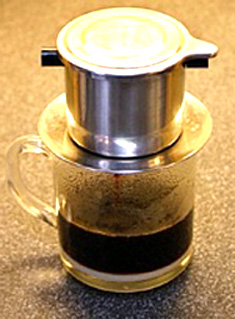
"...As I was steeping my coffee this morning--Vietnamese style with the stainless steel filter and fine grounds--I noticed a strange marketing slogan across the front of the coffee package. The coffee is from a Vietnamese maker, but for whatever reason, the slogan is in broken English. It reads “Give you Source Inspiration of New Creation.”

I’ve struggled lately to find a source of inspiration of any sort. That’s probably why this caught my attention. The words “Inspiration of New Creation” stood out like blinking neon lights along a dark stretch of highway. It was the promise of the new creation that first motivated Daniel and me to untangle ourselves from the mad rush toward career and a home and prospective wealth. It was what prompted us to come to this humid little corner of the world... The new creation is what we look toward and what gives us hope in a world that is so dark and cracking and filthy. When I forget the promise of Christ’s return and the restoration of everything good, I can’t look past the things here that are dirty and worn. The stench of urine in the alley outside our door, the rats that wake us at night, the damp and polluted air pressing in upon us. Lately I’ve been so lost in the haze around me that I’ve missed the approaching sunset. This world will soon end. It is our privilege to prepare ourselves and others for the next.

Father, please give us the strength to persevere to the end. Keep us faithful and give us courage. Help me to treasure time in your Word and to fiercely protect my time in prayer. I have not done so lately, and I’ve missed it. I need to remind myself of your promises and let my heart be guided by you. Help me to do so faithfully..."

**********

Five years later this is still my daily experience and still my prayer. When my expectation of God's faithfulness fades to shadow, the ugliness and meanness in the world around me become glaring. It is as if I am carrying only a pocket light. As long as I keep the feeble beam forward, I can walk by it. I am always tempted, though, to train the light on the skittering at my feet or a scratching on the ceiling. When I do, I stumble. I get lost and disoriented. Practically speaking, I get tired of the noise and pollution and poverty of the city. I grumble and complain and pity myself. I want to quit, to resign myself to an easier--or at least more comfortable--life.

When I once again remind myself of God's promises and reflect on all the ways he has been faithful to me, I begin to see my way forward. This is why reading the Bible and praying have become more to me than just rituals or obligations. Vietnamese coffee may claim to be a source of inspiration (and caffeine certainly doesn't hurt), but in the end I'm most inspired when I'm reminded of the coming new creation--a world where there is no suffering, no death, no evil or ugliness. The anticipation of all God has promised sets even today right. Reading God's Word and praying are the best ways to keep these promises before me. They give me much needed "Source Inspiration of New Creation."

Tuesday, January 6, 2009

Beauty

Have I mentioned that I hate haircuts? I especially dread the ordeal in Vietnam where I have to explain what I want and spend an hour or two chit-chatting in a second language. I made the mistake again of using the word for "layers" and ended up with another bad shag. I must strike that word from my vocabulary. Instead I need to learn how to say, "Could you please do that clever snip-snip technique where you cut out a few strands at a time in just the right places and my hair miraculously has volume and texture instead of hanging flat and limp against my face as it was created to do." If anyone can translate that, I'd be forever grateful.

Given my distaste for beauty treatments, you would think that I would choose a hairstyle that doesn't require frequent cuts or a salon that is familiar, but no. My hair looks stringy and unkempt when it is long, and I've yet to find a salon I can visit more than two or three times before I have to cut and run. The staff at one place kept pestering me to teach them English. At another place they pressured me into manicures and massages and even conned me into an expensive hair treatment by starting it before I could refuse. Instead of holding my ground, I generally skulk away in search of a salon where I can get a simple haircut without being bullied into styles and products and services that I don't want or need. Does such a place exist in the world?

This is all complicated by the fact that I am still a redneck at heart. I try to put on a sophisticated face, but beneath it all I will always be fresh from the woods. I would so much rather be sitting under my favorite tree by the beaver pond than prostrate in a salon with a twenty-something Vietnamese girl massaging each arm, another at my feet, and a fourth shampooing my hair. In the woods I am myself. In a salon chair, I am not. All the moisture travels from my mouth to my palms. I stammer and trip over things and find myself completely at the mercy of the stylist.

"Could you please just trim it a little?" I ask timidly.

"Trim?" the stylist asks with one raised eyebrow and a heavy undertone of skepticism. "When was the last time you had this cut?"

"This," I think to myself. "Is it really that bad?"

The stylist runs his fingers through my hair, frowning and clucking. I crumble.

"Well," I hear myself saying, "what do you think...?"

I should know by now never to hand over the keys so easily. I always get taken for a ride. I go in for a trim and come out Florence Henderson. Will I never learn?

At least this time the staff let me off gently when it came to services and sales pitches. I only had to smell three or four products and refuse a manicure a handful of times. The arm-massage girl prattled on about the importance of keeping up one's appearance. She insisted that being beautiful makes a woman happy. The stylist chimed in and claimed that he had never met a woman who couldn't be made beautiful with the right effort. I momentarily wondered what he was implying, but decided not to open that door. I made a feeble comment about how inner beauty is what really matters. They didn't seem to hear me, so I rallied my courage and insisted more eloquently that beauty of the soul ("innards" in Vietnamese) is what makes us truly joyful and that outward beauty will only fade. Undaunted, the arm-massage girl smiled and said, "Isn't it best to have both while we can?"

In the end, I managed to walk out with my shag and an extra fee for shampooing and blow drying that was unavoidable. I came home and shed the obligatory post-haircut tears, then made dinner for the guys. Life must go on. After all, inner beauty is what matters, right.

Friday, January 2, 2009

Borrowing

I started counting this morning and realized that I am currently keeping four journals: two for writing projects (prose and poetry), one for reflections on what I am reading in the Bible, and now this online journal of daily happenings. It's definitely not the most streamlined approach and the blog tends to get short shrift. To remedy that I've decided to borrow bits and pieces from the other journals that will give you a behind the scenes look at our life. If poetry is not your thing or random thoughts on Leviticus don't get your tractor going, then you have my permission to skip these posts. I should also add a disclaimer: most of this stuff is a work in progress. Please forgive the rough edges.

Here is a poem that I've been tinkering with for the past couple years. The final verses fell into place after Nathan was sick on New Year's Eve. (He's fully recovered, by the way.) I had several loads of vomit-stained laundry on my hands and lots of time to think while hanging it out to dry. The poem is not in its final form (are they ever?), but the ideas are mostly in place.

Clean Linen

I worked at a desk
In an office with a door.
I wore black and a scent
From a bottle called "Clean Linen."

I read Living
And thought about laying
Cloth napkins at dinner
Or place settings for four.

Now I live and work and read
At home.
Mike Mulligan mostly,
Or that curious George.

I stand at a counter
In a kitchen with cool tile,
Barefoot and scented
Of soap and soured milk.

Weary, I wash
And think about drying
This day's linens
From a string in the sun.

"On summer days,"
My mom once said,
"There's nothing nicer
Than a sheet in the breeze."

A skeptic, I shrug.
Duty-bound,
I bundle my burden
And trudge toward the line.

I question sometimes
The quality
Of a battle ever-fought,
Seemingly never won.

But I groan with the rest
Of grubby creation
And raise my cases
Against the wind.

I hear the snap
Of a breeze-snagged sheet
Drawn taut
Before the sun.

I watch it glow
The glory of God its radiance,
A fine linen
Bright and pure.

I marvel
At this quiet overthrow,
Old made new,
Redemption in a microcosm.

I stand still and straight,
Amazed, admiring
A motley, flag-waving tribute
To virtue--unbought, unbottled.

January 2009
Copyright Heather Owens

Explanation: I wrestle sometimes with the value of time spent on so many mundane tasks: dishes, laundry, diapers, etc., etc. Occasionally I miss operating in a world of words and thoughts and theory. I've come to realize, though, that caring for a family is actually thoughts and theory in the trenches. I am forced to live what I believe, and in return, I am privileged to experience the hand of God in the minutia of the everyday. As I was hanging damp bed sheets the other day, I couldn't help but enjoy their coolness and the clean scent of laundry soap clearing the house of less pleasant odors. I was reminded of the pure, white robes that we will someday be given and the verses in Revelation about the bride of Christ wearing "a fine linen, pure and bright"--the cloth's beauty comprised of the righteousness of God's people. Washing laundry, caring for a sick child, cleaning up messes--these are small acts, but important. I have the honor of redeeming things on a small scale (the laundry and dishes day in and day out) and am reminded of God's constant work of redemption in the world. Someday all creation will be made new and never soiled again--what a thing to look forward to. The battle will be at an end. Until then, I have work to do.

Saturday, December 6, 2008

Anticipating Christmas


The advent season is all about anticipation. It is the one time of year when we celebrate waiting. No, I don't mean waiting in long lines at department stores or waiting to cut off a red mini-van and a green sedan in an attempt to snag the last parking spot within a half-mile of the mall. I'm not talking about waiting for all the good things that come on Christmas morning: piles of presents, sugary pastries, and candy-filled stockings. (Though the pastries are especially worth waiting for.)

Each year we wait symbolically for the baby Jesus to make his grand entry into replica mangers placed carefully below high voltage stars. We sing the songs the angels sang and read the familiar story many times over. We try not to think too long or too hard about Mary and her ordeal in the barn. Like the shepherds, we always find the baby born, wrapped, and glowing. This is how babies should be found.

If Christmas is all about celebrating God's gift of his son, then Advent is about anticipating that gift. We wait expectantly, eagerly. Three weekends ago we put up our tree and twinkly lights and Christmas decorations. Caleb helped me unwrap each of the nativity pieces. The paper has been wound and unwound so many times that it is soft, almost like fabric. He was remarkably careful for a three-year-old. Each time he uncovered a new piece he would squeal with delight, "Mama, it's a shepherd!" "Look, Mama, it's the angel!" "Ohhhhh, it's a chicken!!!" He took the whole entourage to bed with him for several nights (the figurines are made of plastic), and we could hear him making up songs for each character. My favorite went something like this...

The shepherd came.
Oh-whoa, Baby Jesus,
Baby Jesus you peed in your bed.
Oh-whoa, Baby Jesus.

(I love Caleb's enthusiasm...and his theology. Yes, Jesus was fully God AND fully man. None of this "No crying he makes" business.)

As we anticipate Christmas, I find myself thinking about Christ's next coming. After all, isn't Advent a concentrated version of the Christian life. We are waiting for Christ to return again and for God to "wipe away every tear" and for "death to be no more" (Revelation 21). In the meantime, we celebrate; we obey; we try to remain faithful. This is why Advent and Christmas are so important to our family. It is a once-a-year reminder of what we're all about...waiting. Caleb obviously doesn't need any encouragement to enjoy the season, but I've been trying to find ways to help the rest of us anticipate Christ during Advent. What does your family do to celebrate and remember? I'd love to get some fresh ideas.

Thursday, November 27, 2008

Cultivating a Grateful Heart

All day yesterday I compiled a mental list of things I'm thankful for. I rattled off family and home and food and all the other easy answers, but then I was stumped. It just didn't seem like enough. All day long I felt like I was in the the Peanuts episode when Patti invites herself and a few friends over to Charlie Brown's for Thanksgiving. They gather around a tablecloth-covered ping pong table expecting turkey and all the trimmings, but all Chuck and his indomitable dog can muster is some popcorn, buttered toast, and jelly beans. I wanted to feast yesterday, but I was served up a snack. My ability to be grateful fizzled on me.

Do you ever feel that way? Do you ever find yourself dreading being asked what you're thankful for or trying desperately to remember something unique and impressive? The only things you can come up with sound about as exciting as cardboard. Maybe I'm the only one tempted to invent a story. "Well, this year I'm thankful for the extra income from that lottery ticket I found stuck with chewing gum to the sidewalk. It's been so touching to see orphans fed and the homeless sheltered and pets adopted. I just can't stop grinning at all the goodness."

Feeding orphans or sheltering the homeless or even adopting pets are legitimate things to be thankful for, as are family and home and food. It's just that being thankful for things isn't very satisfying. All the good gifts in the world are really just popcorn and buttered toast if we forget the Giver. Cultivating a grateful heart involves more than just remembering to pause and appreciate our loved ones or our comforts. A grateful heart embraces God who gives us these things. What's more difficult is that a grateful heart embraces God even when he seems to be withholding our gifts or, harder yet, taking them away. Just over a year ago I was lying in a hospital in Singapore, five months pregnant, waiting to see if we could postpone delivery long enough for our baby to live. Every year during this holiday season, my parents and Daniel's parents struggle with having us so far away. I'm sure they are grateful for their children and grandchildren, but they don't often get to enjoy those blessings. Just this morning Daniel received an e-mail from a family friend whose husband passed away. There are times when a grateful heart must look beyond blessings to see a good God who never changes.

I am often reminded of the story of Abraham hiking toward the mountain to sacrifice his son, Isaac. What must have gone though his head! I imagine he counted every step. At each familiar turn in the path he remembered, "Ah, this is where we gathered berries last summer. This is where Isaac fell and got that scar on his left knee. This is the spot where he loves to come swimming..." Maybe he even thought to himself, "This is the last time... I may never see my child in this place again."

We can't know exactly what Abraham was thinking, but the book of Hebrews does give us a glimpse into his mind. Chapter 11 tell us that Abraham obeyed "by faith." In other words, he figured that God was so good and so powerful he would never go back on a promise even if it meant raising Isaac from the grave. We know the end of the story. We remember that just as Abraham was about to kill his son, God stopped him. Abraham had passed the test. He had demonstrated that he loved God even more than he treasured God's good gift. He obeyed and trusted God even when that gift was in jeopardy.

Few of us are ever put to this kind of test. In fact, instead of examining us, God proved his own love in Christ. For this I am deeply grateful. Hmmm, that is more satisfying. Maybe I am finally on the right track. Where do I go from here, though? If being thankful for all the good things God has given us only leads us part way toward being grateful for God himself, then how else do we cultivate a grateful heart? How do we look beyond blessings and see God? I'd love to hear your thoughts if you have any. In the meantime, I will give thanks to the Lord, for he is good and his steadfast love endures forever (2 Chronicles 7:3, paraphrased).

Monday, November 3, 2008

Praying in the Fray

I read somewhere that Susanna Wesley would pull her apron over her head as a signal to her children (all 19 of them) that she was praying and was not to be disturbed. This was held up by the historian as evidence of personal devotion and a deep commitment to spirituality. That take on things is possible. On the other hand, I find it easier to imagine a scenario in which a frazzled Susanna reaches her saintly limit and cowers under her apron pleading with God for enough grace not to strangle little Johnny or Charlie. It is said that her children knew not to disturb their mother when she was praying. Of course they did. All children know when their mother has completely had it. Susanna employed her trusty apron. My mom brandished her wooden spanking spoon. I get a big red "V" on my forehead. No one wants to disturb Mom when she's reached such a pitch of desperation that she is relying on divine intervention to bolster self-restraint.

I'm probably not doing justice to Susanna Wesley, but these days history is anyone's ball game. We make of it what we can. I'm not necessarily advocating this approach, just taking advantage of it. Somehow it is comforting to imagine a mother who raised the likes of John and Charles Wesley needing to hide behind her apron to salvage a few quiet moments for reflection or prayer or a ten minute doze.

That said, I do admire Susanna's tenacity. She didn't retreat. Instead she found ways to worship in the thick of life. She did it behind her apron or while she taught her children their lessons. Worship was a part of her busy life not a diversion from it. Sometimes it seems that we treat worship like yoga. It is something we do to take a break from our day, to calm ourselves, and to prepare to jump back into the fray. It's as if God is reserved for quiet moments, scenic hilltops, and church auditoriums. We're lost without an overhead and guitars. We forget that God is with us. He is near, even when pea soup is scorching on the stove and the baby is screaming for attention.

Don't get me wrong, there are times when we do need to withdraw from all the noise of life. We need to carve out crevices for solitude and reflection and prayer. I'm just uncomfortable with a tendency I see in myself to think of retreat as the only way to meet God. I forget that he is in the midst of the fray as well.

Yesterday I read the Bible and prayed in a tent constructed from a bed sheet stretched between a couch and chair in our living room. It's a new tactic. I've discovered that if I put Nathan down for a nap and set Caleb's imagination going down some path, I can eek out a few moments to read and pray and otherwise collect my thoughts. Gone are the days of lengthy vigils in the campus prayer chapel or long, solitary walks in the woods. For a while I feared that this meant my days of sensing God's nearness were gone as well. It's hard to praise God while cleaning cereal off the floor for the hundredth time in a week or to pray with a three-year-old playing horsey on your leg. Most days I fail miserably at it. I am learning, though, to meet God in the thick of things. Yesterday this meant praying in a tent while Caleb sang campfire songs. Some days it means just remembering to thank God for the things that bring me joy or keep me sane--Nathan's slobbery kisses or Daniel washing the mountain of dishes I'd put off till the day of reckoning (aka. the morning of empty cupboards). I worship in the fray imperfectly, but I hope I am getting better at it.

Surely Susanna and I are not alone in our mad attempts to celebrate God and turn our attention toward him in the thick of life. Do you have any strategies of your own? If so, leave a comment below. I'd love to hear your suggestions.